
Can Foreigners Buy Property in Japan? Ownership, Structures, and What It Doesn't Get You
Foreign individuals and companies can generally own Japanese land and buildings — but ownership gives you no visa, no farmland rights, and no lodging licence. Here's how to structure a rural purchase correctly.
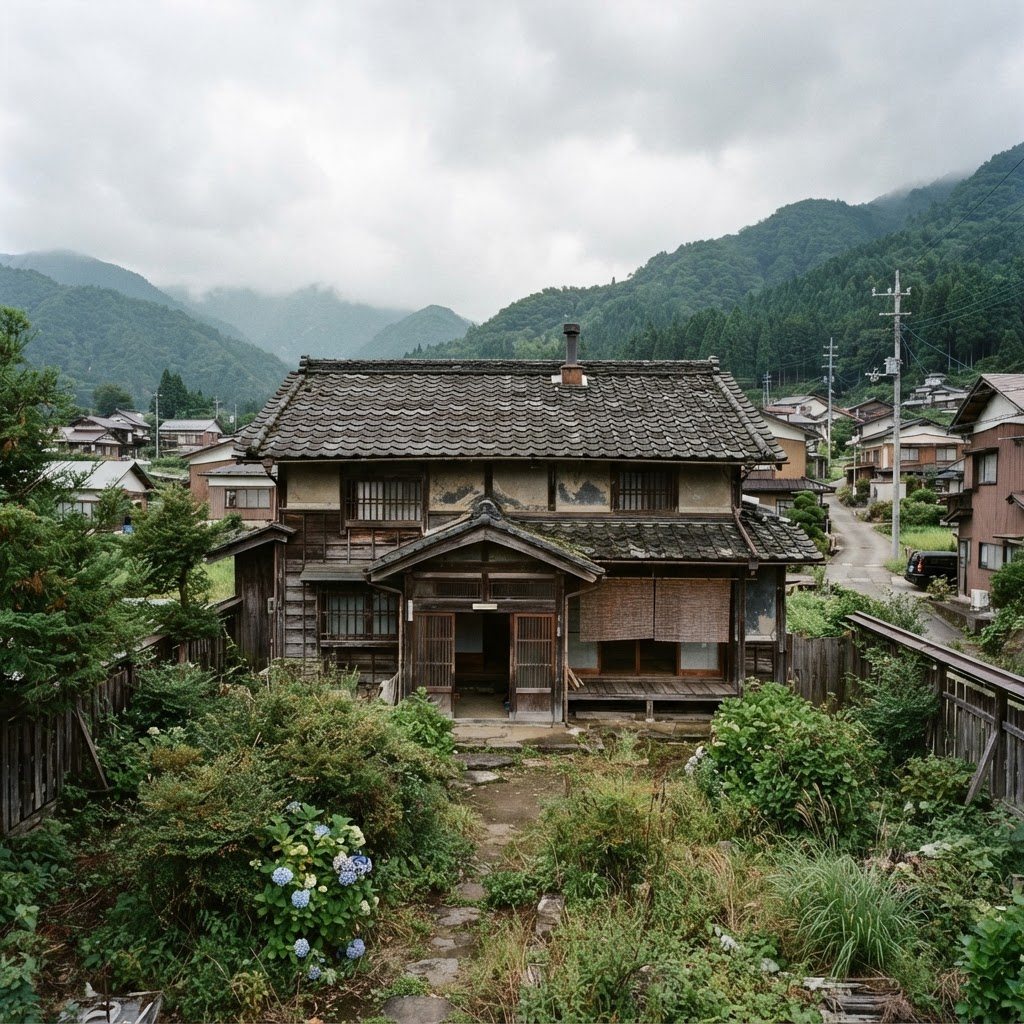
Japan does not impose a general nationality or residency prohibition on owning ordinary residential land or buildings. Foreign individuals and foreign companies may be registered as owners, and the Ministry of Land, Infrastructure, Transport and Tourism describes Japan's real-estate transaction framework as applying without distinction between domestic and overseas investors. So yes — you can buy. The real question is what you can legally do with what you buy.
What ownership doesn't override
Ownership does not override separate restrictions governing farmland, forests, zoning, building use, accommodation businesses or environmentally sensitive land. A promising rural listing may contain several different parcels — a residential lot, rice paddies, fields and forest — each governed by different rules. Farmland acquisition normally requires Agricultural Committee approval under Article 3 of the Farmland Act; forest acquisition triggers a separate municipal notification within 90 days.
Also note that being legally able to own the property does not mean every seller, municipality or akiya program will accept every ownership structure. Municipal programs may prioritize individuals who will relocate, join the local community, renovate within a set period, or keep the property as a principal residence. A corporate purchaser may be ineligible for some grants even when it can legally own the property.
Choosing an ownership structure
For a property that is primarily your home, personal ownership is usually the cleanest structure to evaluate first. A foreign holding company owning directly is legally possible but tends to combine Japanese corporate tax filings, possible foreign-company registration, home-country reporting, local banking difficulties, and awkward questions around personal use of a corporate asset. A Japanese GK or KK becomes compelling only when the guest operation is a genuine commercial business with staff, recurring revenue and local contracts.
| Consideration | Personal ownership | Foreign HoldCo directly | Japanese GK/KK subsidiary |
|---|---|---|---|
| Best fit | Primarily a home, hobby farming, small or later guest operation | Passive investment with a clear cross-border tax rationale | A substantial Japanese hospitality business with staff and contracts |
| Personal residence | Straightforward | Awkward — shareholder occupying a corporate asset needs tax analysis | Requires documented rent or company-housing arrangement |
| Farmland | Still requires Farmland Act Article 3 approval | Should not assume it can own farmland | Generally requires agricultural land-owning corporation status |
| Financing | Most likely to fit a residential mortgage (especially with PR status) | Commercial financing, significant equity, guarantees | Commercial lending possible after capitalization and history |
| Liability separation | Limited — insurance and contracts carry the load | Corporate separation, but parent directly exposed | Legally separate, though guarantees reduce practical separation |
The hybrid option
A useful fourth possibility: you own the residential property personally, and a Japanese operating company leases and operates a clearly delineated guest wing. That separates some hospitality liabilities without placing your home inside a corporation. It requires arm's-length documentation, tax advice, insurance coordination, and confirmation that the lodging licence can be held by an operator for premises it leases.
Taxes on both sides of the ocean
At acquisition and during ownership, budget beyond the purchase price: registration and licence tax, stamp tax, real-estate acquisition tax, annual fixed-asset tax (standard 1.4% of assessed value), and possibly city-planning tax. Rental income from Japanese real estate is Japanese-source income — a non-resident landlord may face a 20.42% withholding rate on relevant rental payments. If you remain a tax resident of your home country, expect worldwide-income reporting there too; Canadian residents, for example, must consider T1135 foreign-property reporting once a property stops being purely personal-use.
Ownership structure decision checklist
Work through these before making any offer — restructuring after purchase is expensive.
The principal risk is not the ability to buy. It is buying a property that cannot legally or economically be converted to the intended use.
Sources & references
- MLIT — Japan's real-estate transaction framework (PDF)
- JETRO — Setting up business in Japan: model cases and corporate presence
- Ministry of Justice — Revised Business Manager residence status criteria
- JETRO — Taxes in Japan: other principal taxes (fixed-asset tax)
- NTA — Real estate income of non-residents
- CRA — Foreign Income Verification Statement (T1135)
Keep reading
The Farmland Trap: Why That Cheap Akiya with Rice Paddies Isn't Automatically Yours
Rice paddies, fields and forest attached to a rural Japanese house are governed by the Farmland Act and forestry rules. Learn how Article 3 approval, blue land, irrigation districts and forest notifications really work.
Zoning, Road Access, and the House You Can't Rebuild
A standing house is not proof you may rebuild it. Urbanization-control areas, the 2-metre road-frontage rule, existing-nonconforming buildings and unregistered extensions — the planning checks that decide a rural purchase.
The Due-Diligence Playbook: Documents, Contract Conditions, and Closing Controls
Japanese purchases don't automatically include inspection conditions. The document request list, the contract protections to negotiate (停止条件, 契約不適合責任), and the closing checks that protect your deposit.